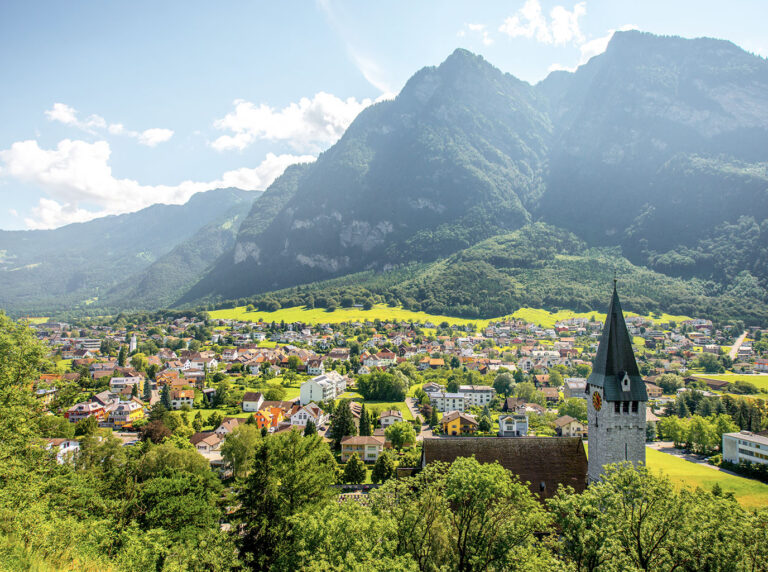
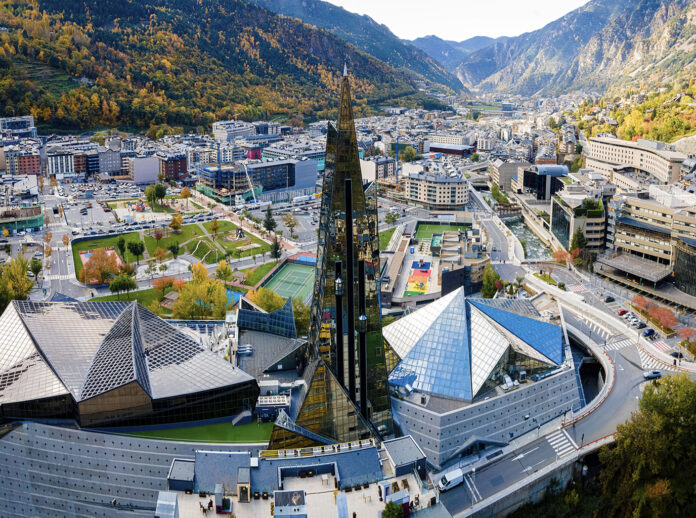
Europe’s smallest states are often treated as historical curiosities. Yet the Republic of San Marino and the Principality of Andorra tell a more significant European story of how political communities can preserve a distinct identity for centuries while adapting their institutions to changing realities. Their survival suggests that sovereignty is not only a question of size or power but also of institutional resilience, civic tradition and the ability to evolve without losing continuity.
San Marino traces its foundation, according to tradition, to 3 September 301 AD, when Marinus, a stonemason seeking refuge and freedom, established a community on Mount Titano. In 2026, the world’s oldest surviving republic marks 1,725 years from that traditional foundation. Empires have risen and disappeared, borders have been redrawn and political systems replaced, yet San Marino has preserved its independence and republican identity. UNESCO describes its historic centre and Mount Titano as an exceptional testimony to the continuity of a free republic and to a long tradition of civic autonomy and self-government. Its history is a reminder that durable institutions depend not simply on force, but on legitimacy, habits of self-government and a strong sense of political community.
Andorra offers a different but equally remarkable example. Its constitutional origins reach back to the paréage of 1278, which established shared lordship between the Bishop of Urgell and the Count of Foix. The latter’s rights eventually passed to the French Crown and, in their modern form, to the French head of state. More than seven centuries later, the Bishop of Urgell and the President of the French Republic remain Andorra’s two Co-Princes. Yet the country is far from being a medieval system preserved unchanged. In 1993, Andorrans approved a democratic Constitution that expressly vested sovereignty in the Andorran people while retaining the co-principality within a modern parliamentary democracy.
Together, the two countries challenge the idea that modernisation requires erasing the past. San Marino has maintained a republican tradition of extraordinary longevity. Andorra has transformed a medieval political settlement into a contemporary constitutional order. In both cases, continuity has been possible because institutions were capable of adaptation.
That same balance between identity and integration now shapes their relationship with the European Union. Negotiations on an Association Agreement with Andorra and San Marino were concluded in December 2023. In July 2026, the Council of the EU authorised its signature and provisional application. The Agreement is intended to give both states broad participation in the EU internal market under common rules, while deepening cooperation across a wider range of policy areas. The formal process is still being completed, including the steps required for signature, European Parliament consent and final conclusion.
For two states whose histories have been defined by preserving autonomy while responding pragmatically to a changing Europe, closer association with the EU is not a departure from their past. It is another chapter in the same story: remaining distinct while finding new ways to belong.